Belts for suits
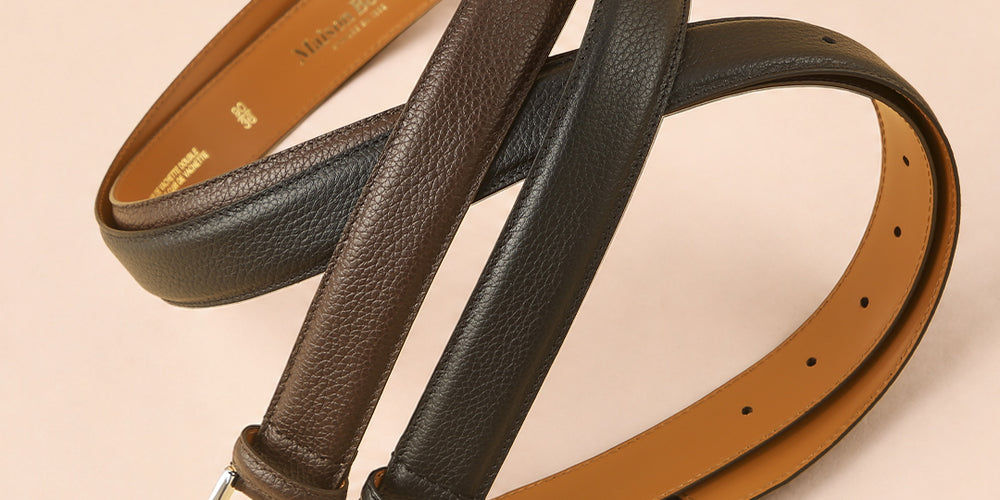
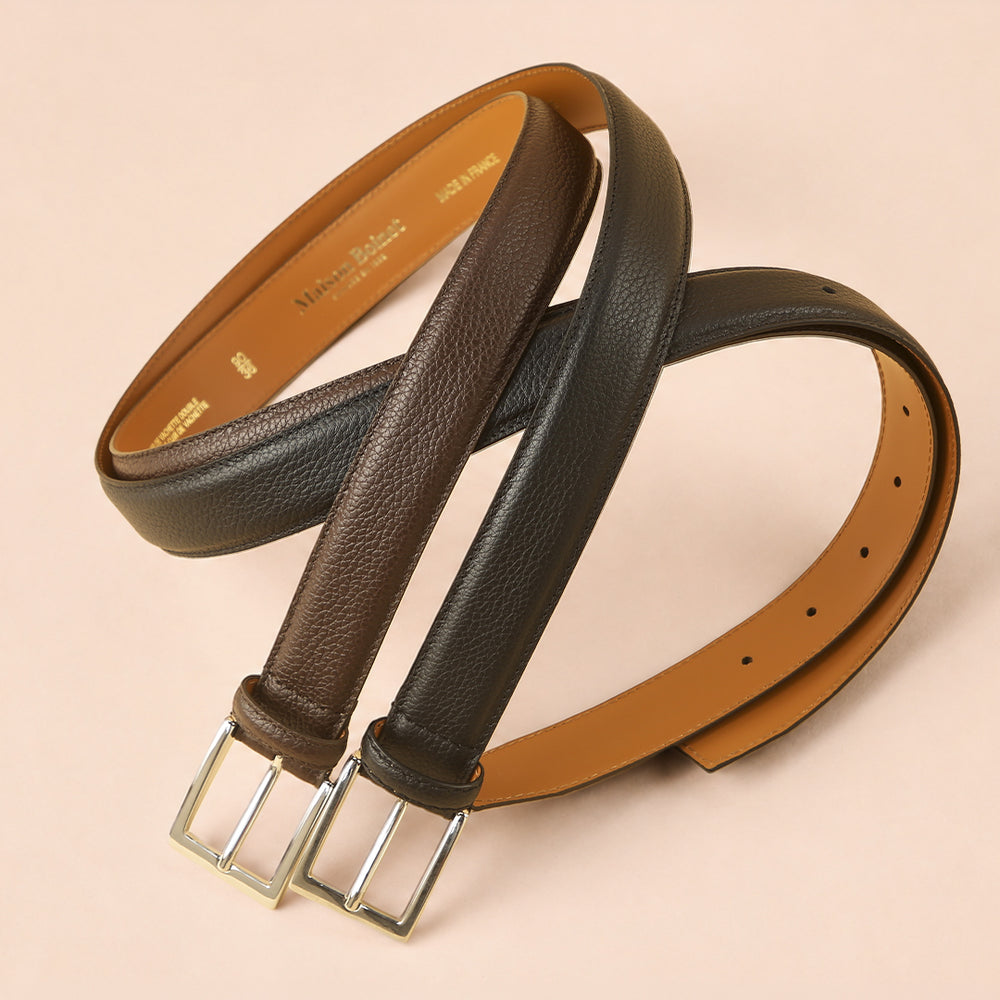
Maison Boinet suit belts are designed to perfectly complement the classic male wardrobe: slim silhouettes, quality leathers, and simple, elegant buckles. Made in Château-Renault, France, they are available in several widths and colors to suit all styles.



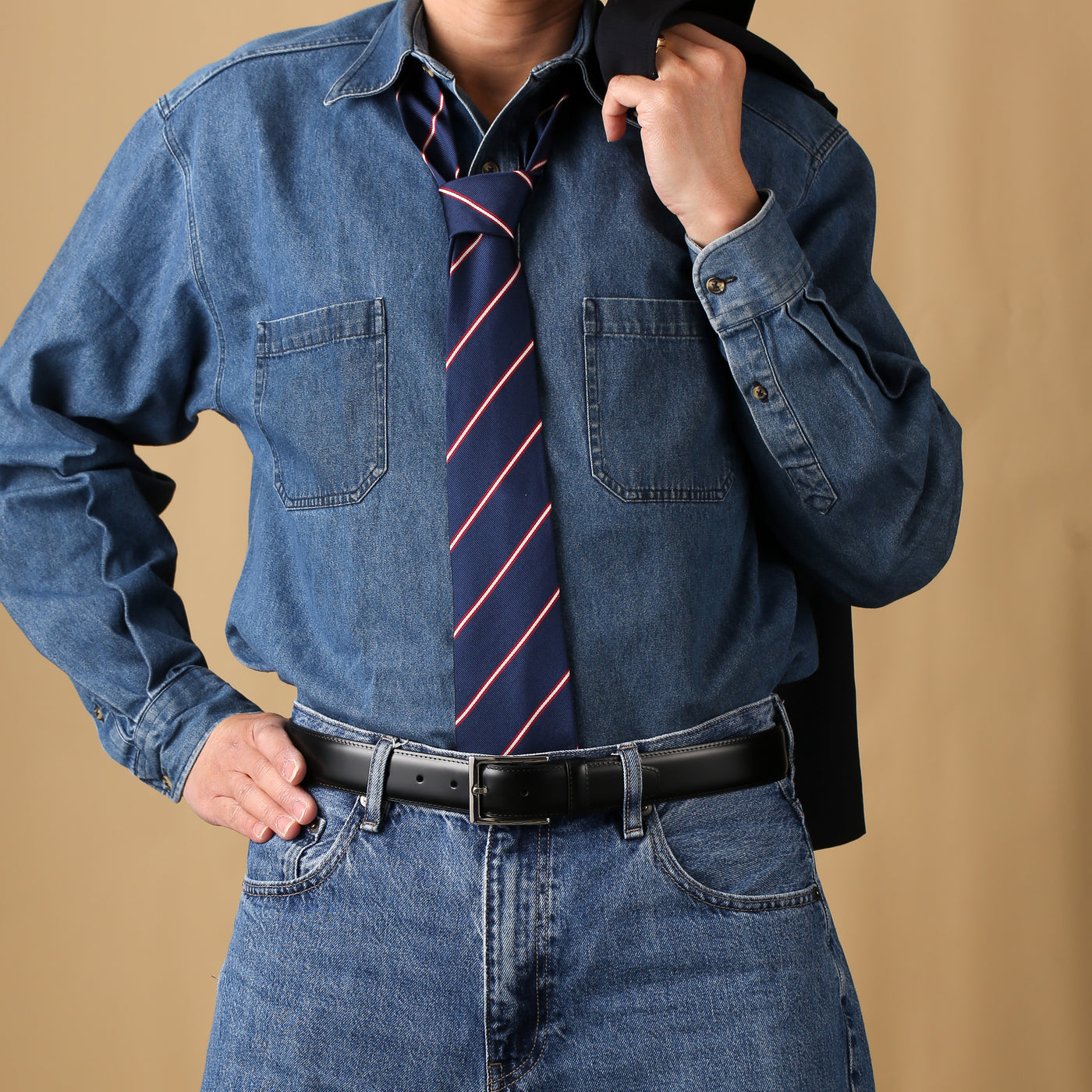

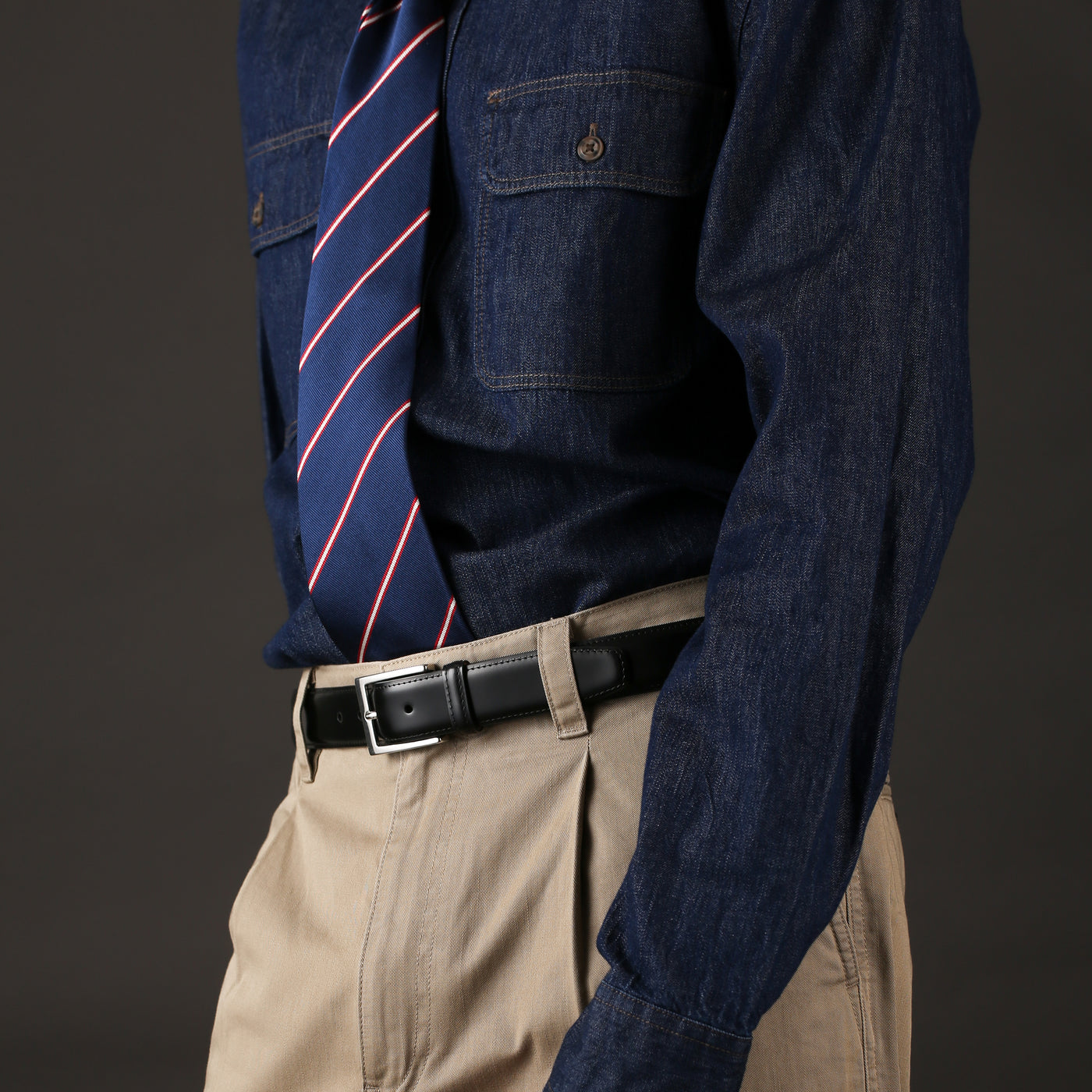

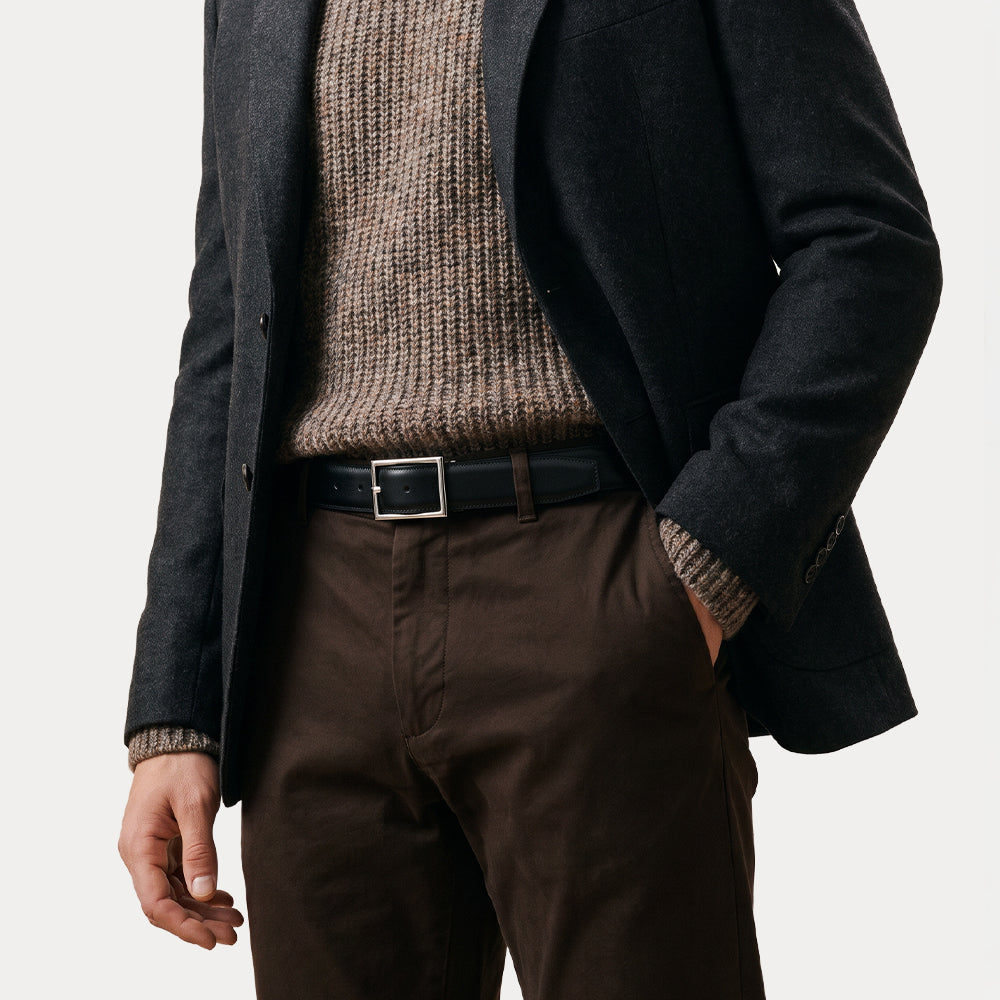


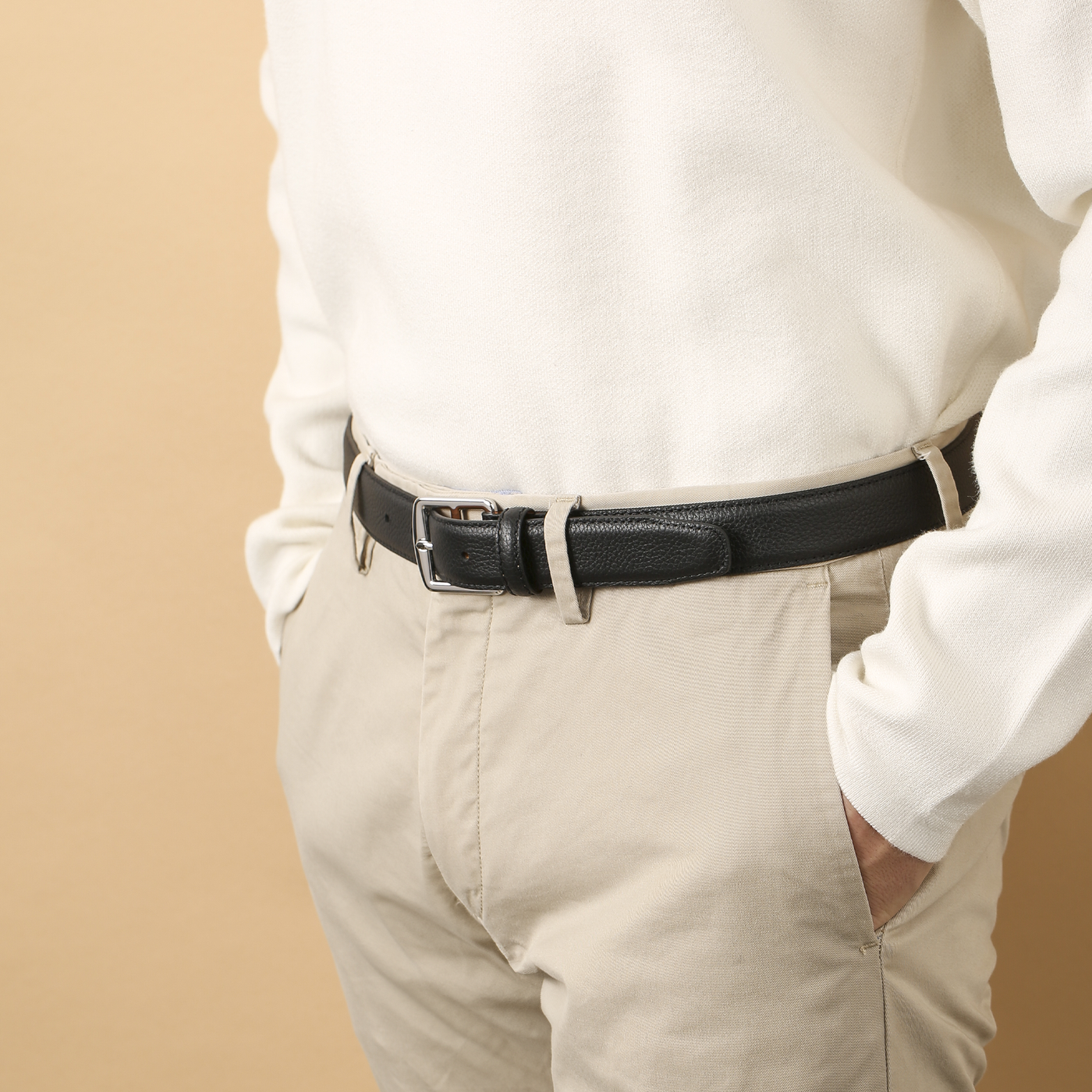

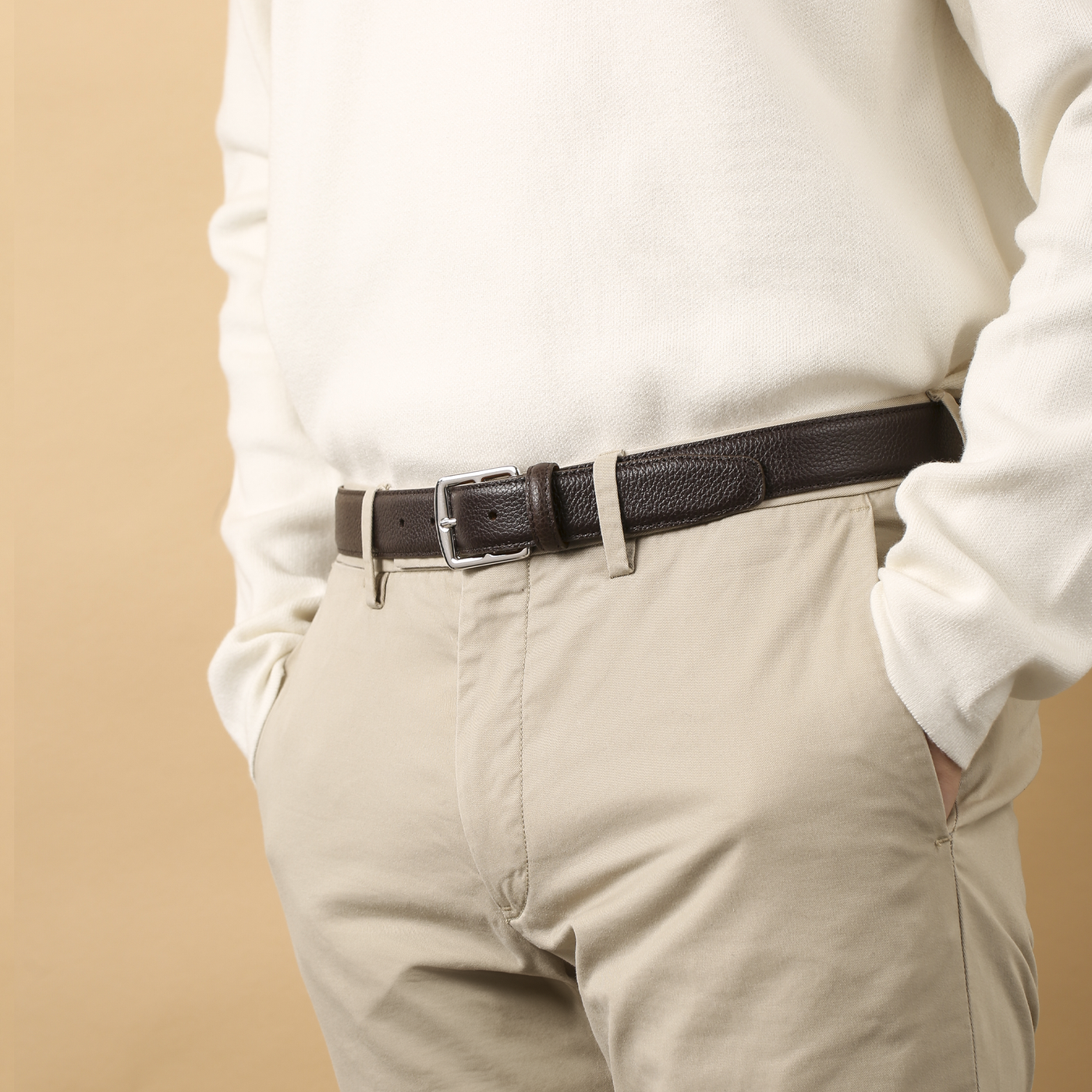


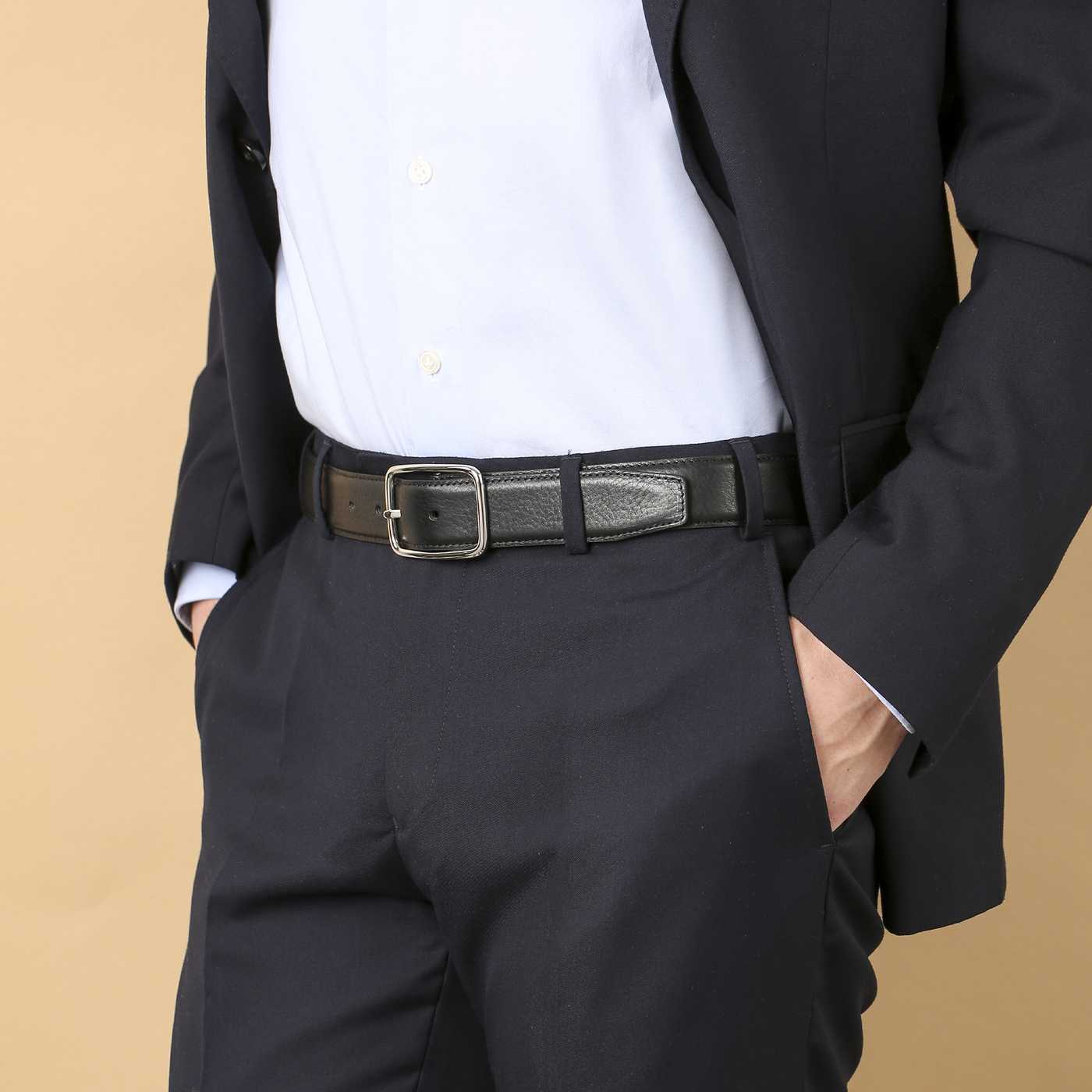


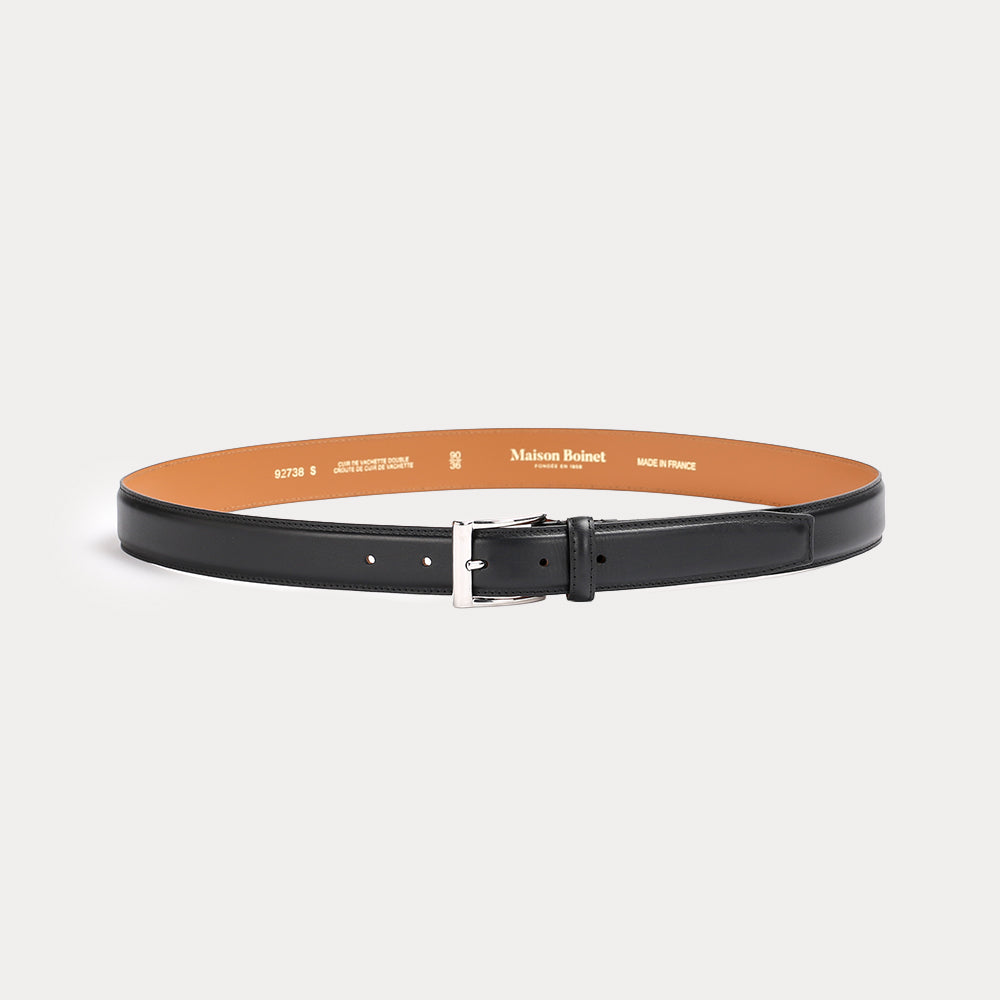

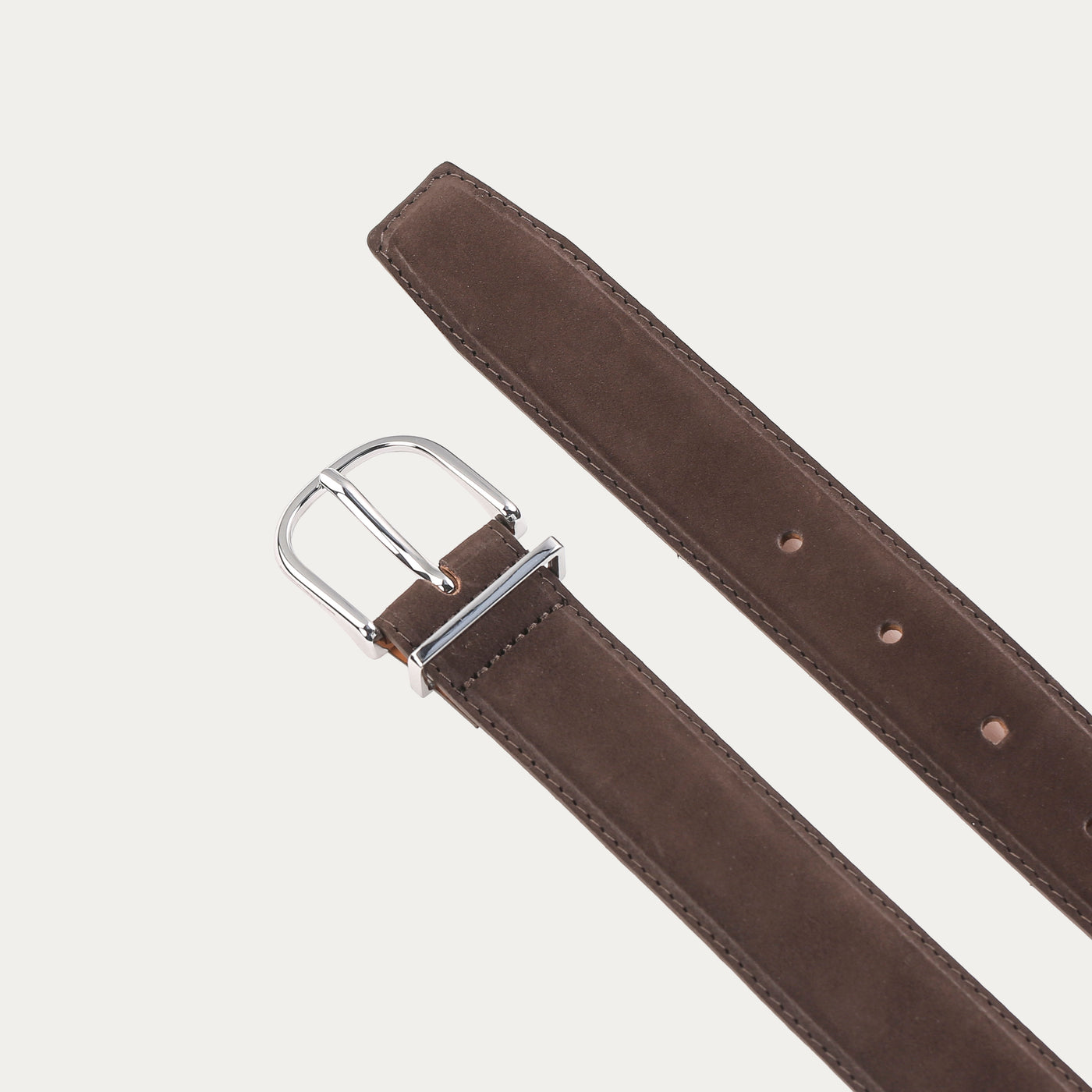


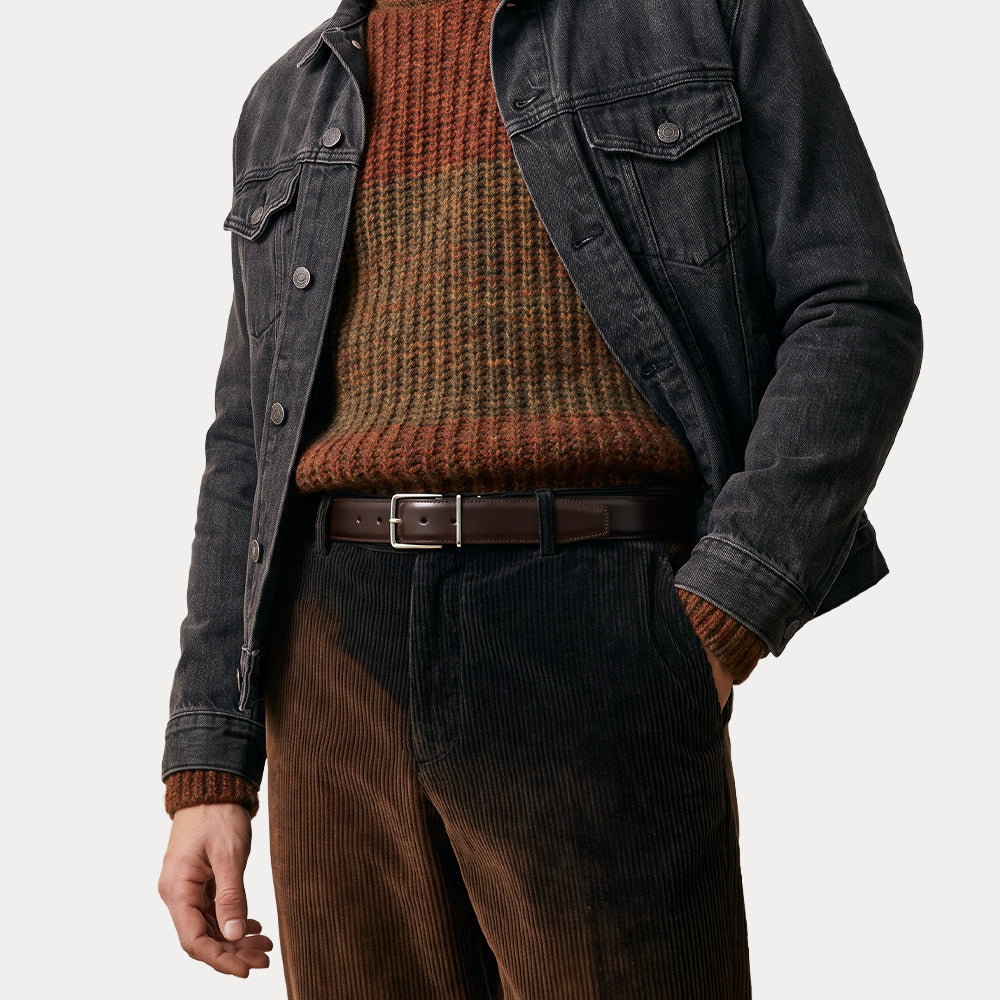

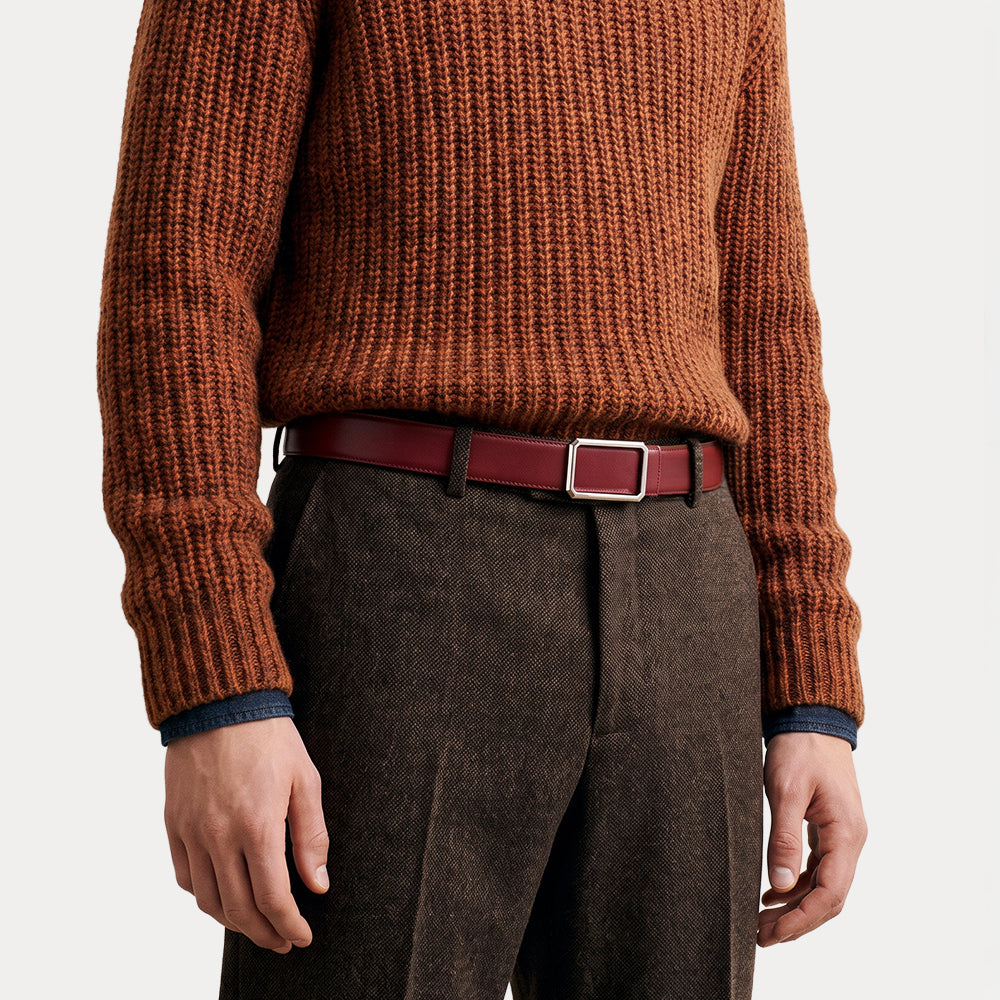

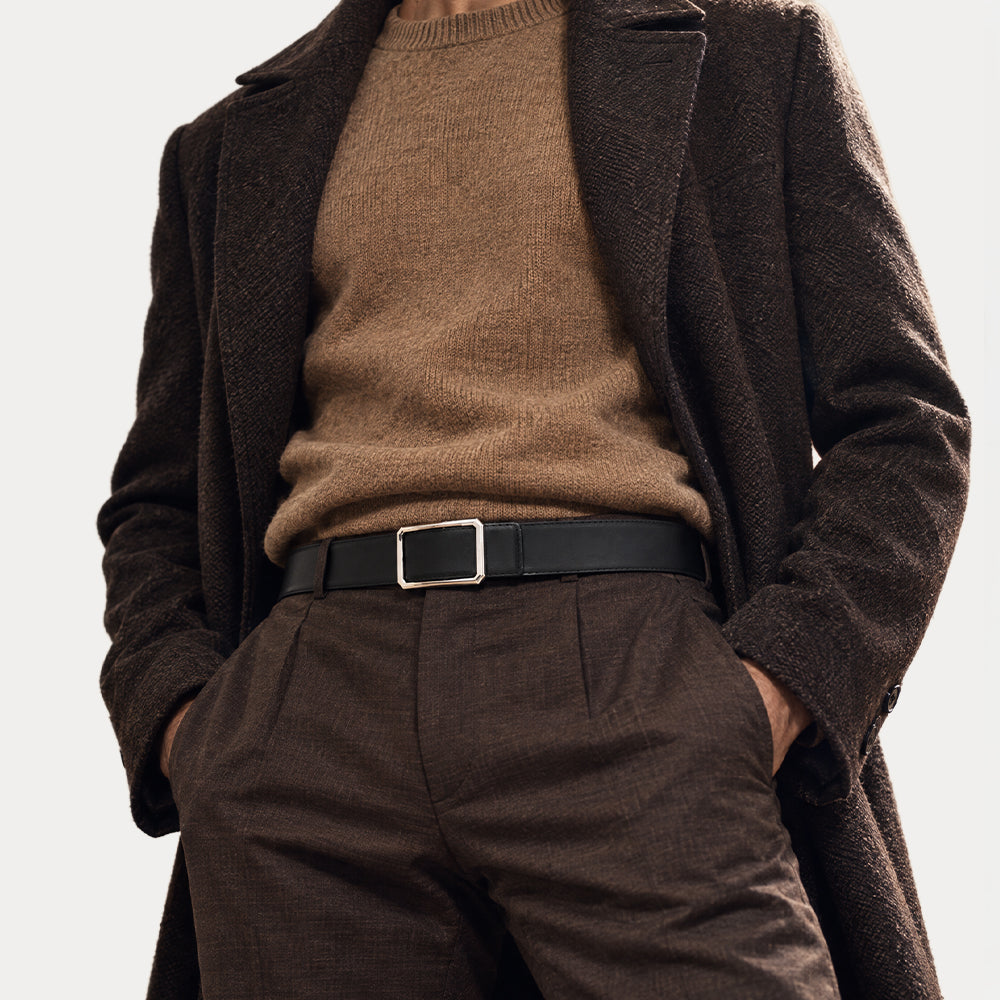


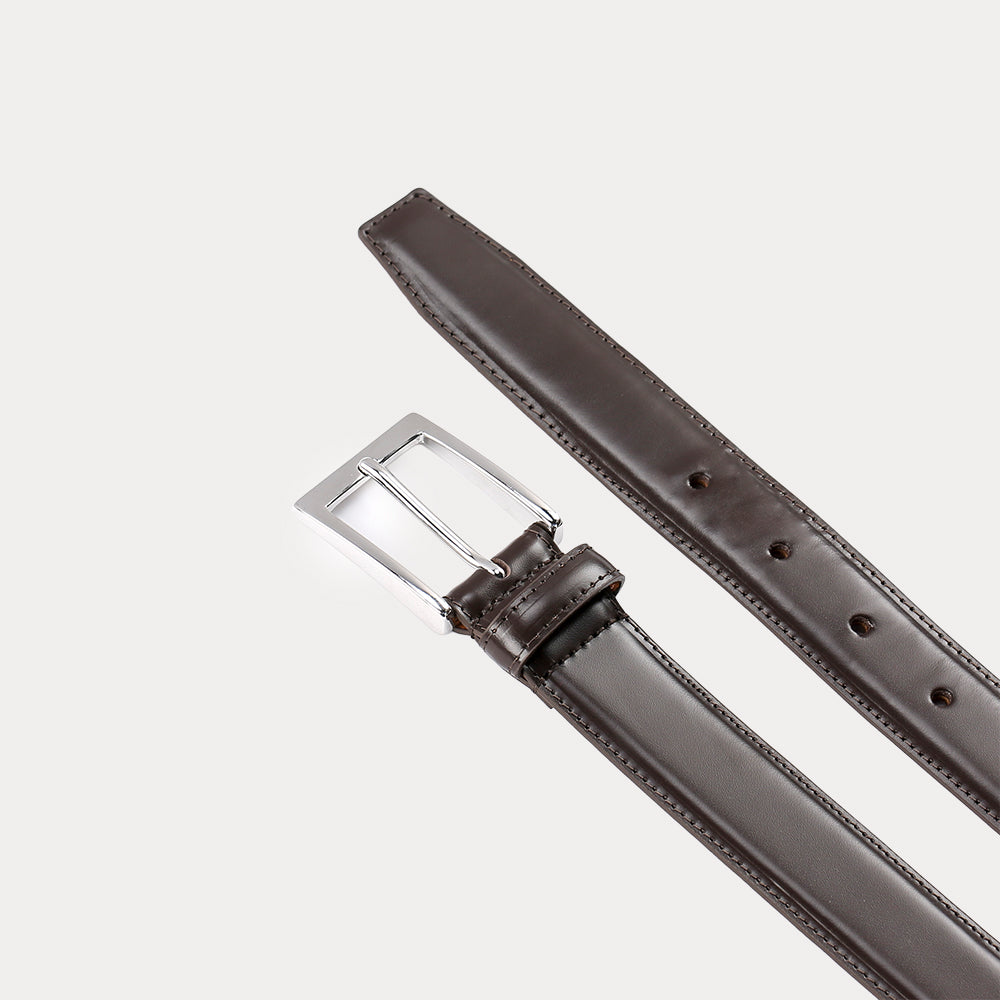


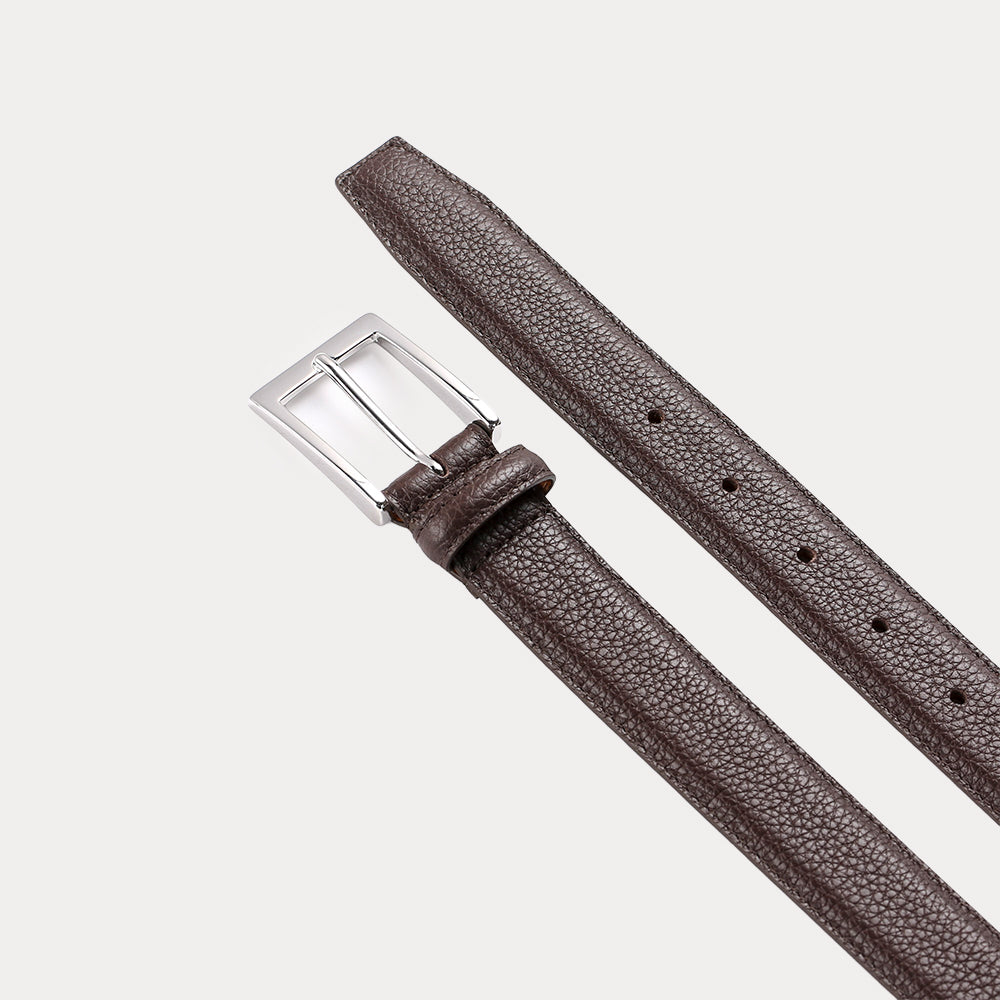

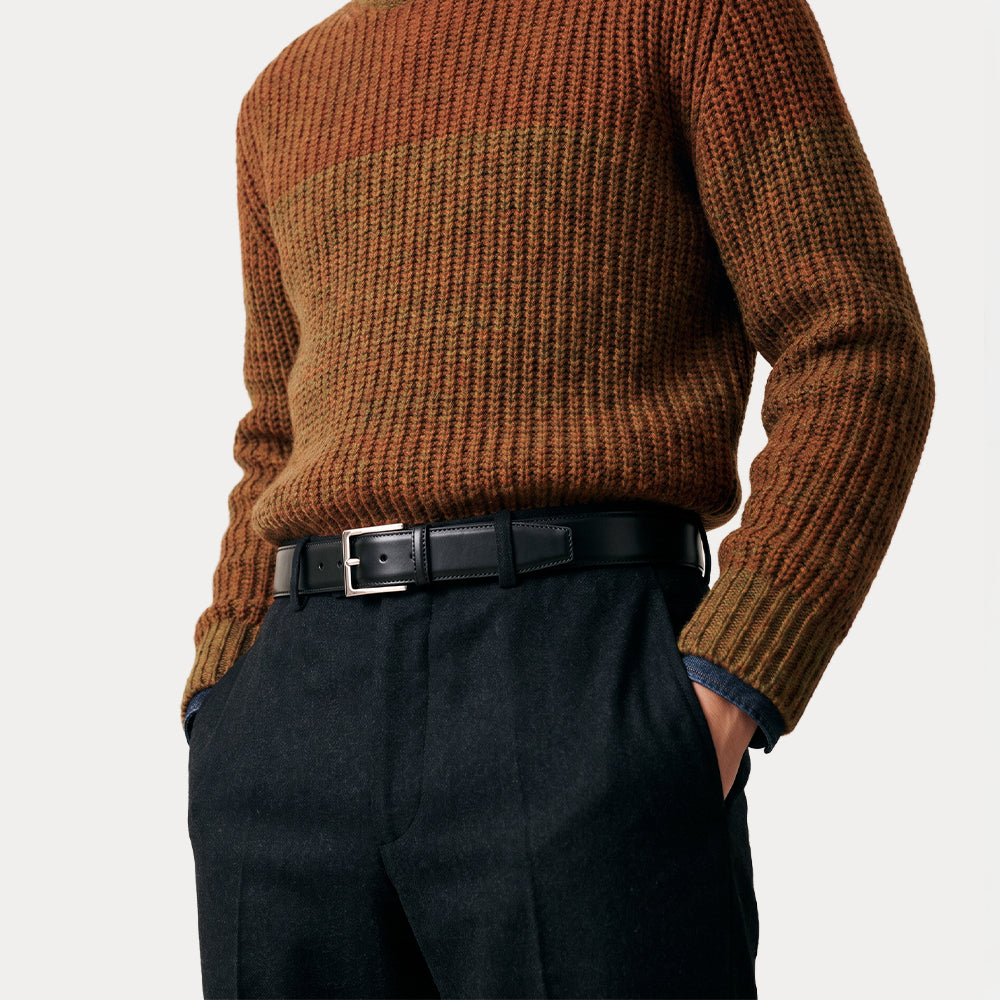


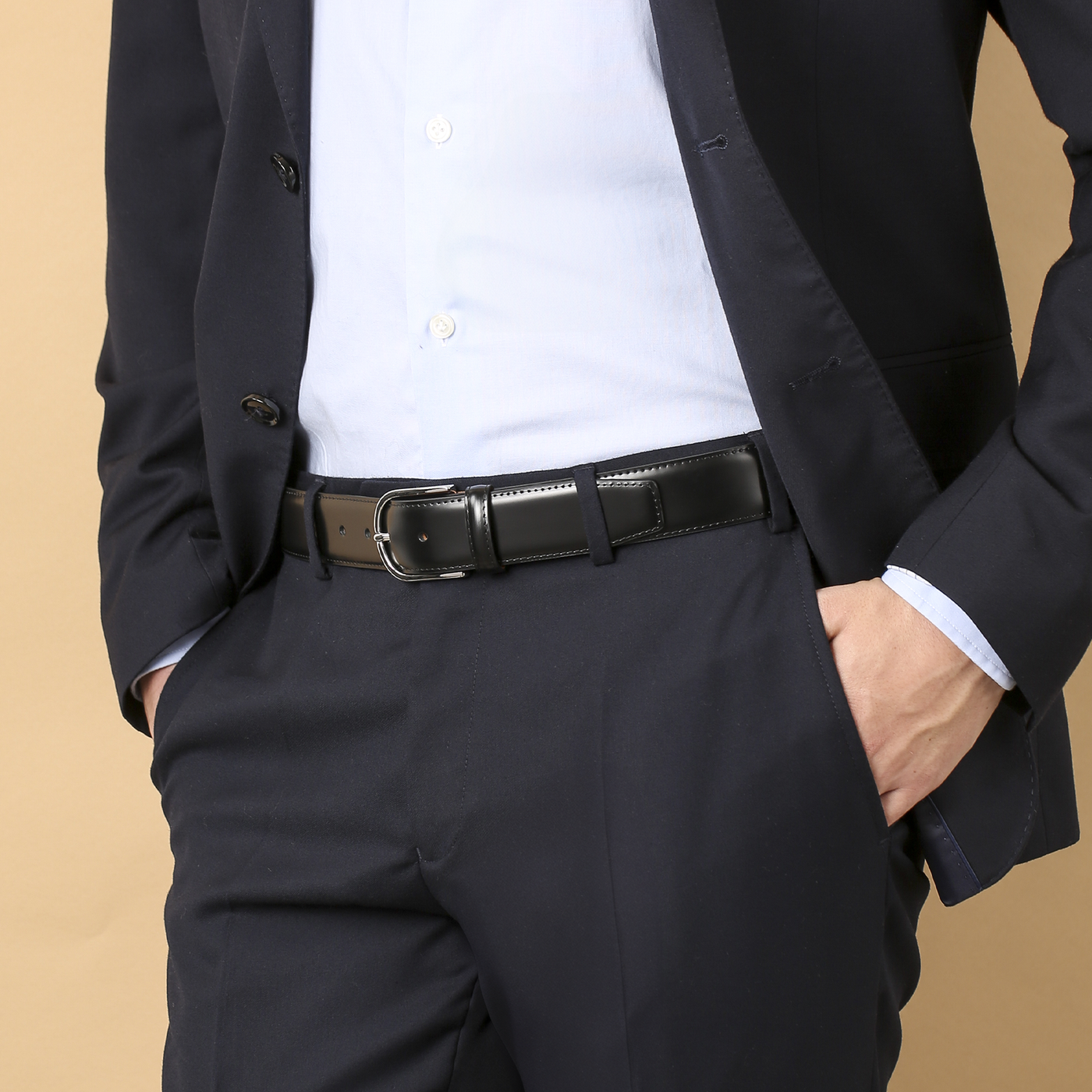
The suit belt, a detail that should never be seen
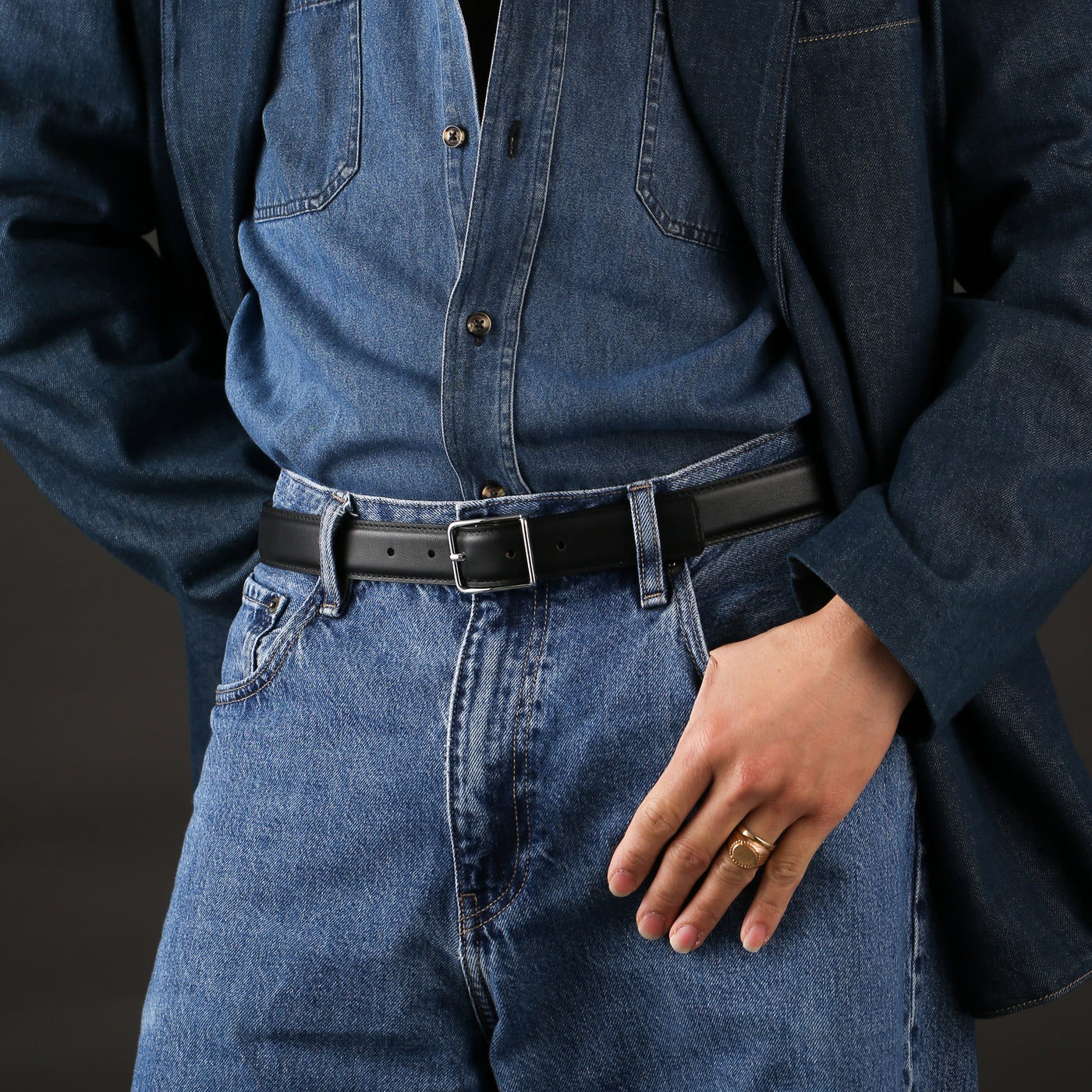
With a suit, the belt is not an accessory in its own right: it is a detail that should blend in with the outfit rather than drawing attention to itself.
The rule remains simple: the leather of the belt should match that of the shoes, black with black, brown with brown, with no exceptions for the most formal outfits.
It is this discretion that distinguishes a suit belt from a casual belt: less width, less visible material, a buckle that remains understated rather than being a style element in its own right.
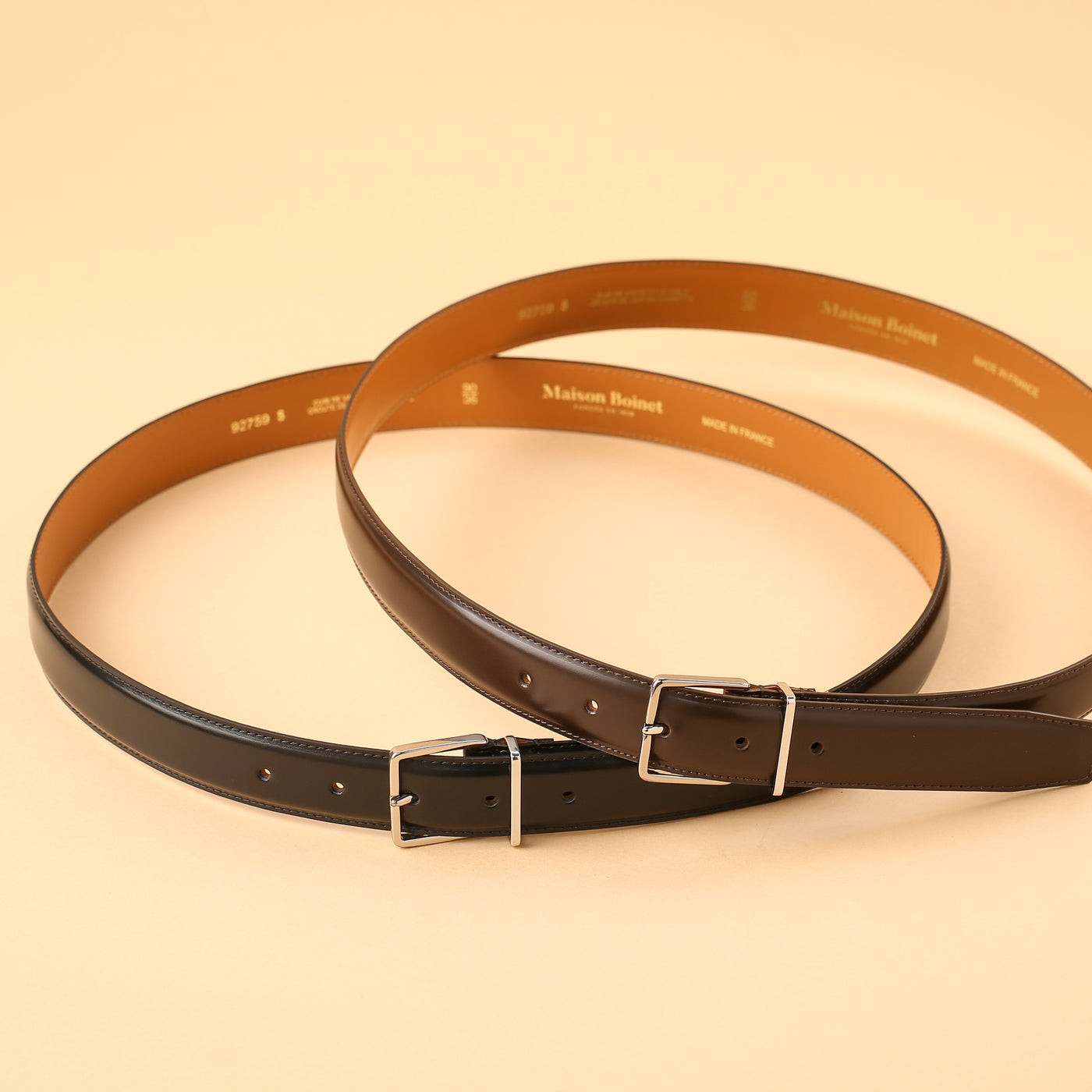
30mm, sometimes 35mm: the right width for a suit
Almost all of our suit belts are available in 30mm, the standard width for dress pants: thin enough to remain discreet under a classic suit belt, wide enough to hold the strap well.
The 35mm remains an alternative for larger builds or pants with wider belt loops, without ever becoming as pronounced as a casual belt.
Thinner widths, 20mm and 25mm, are not part of this selection: they are for more formal use or specific body types, and are presented separately.
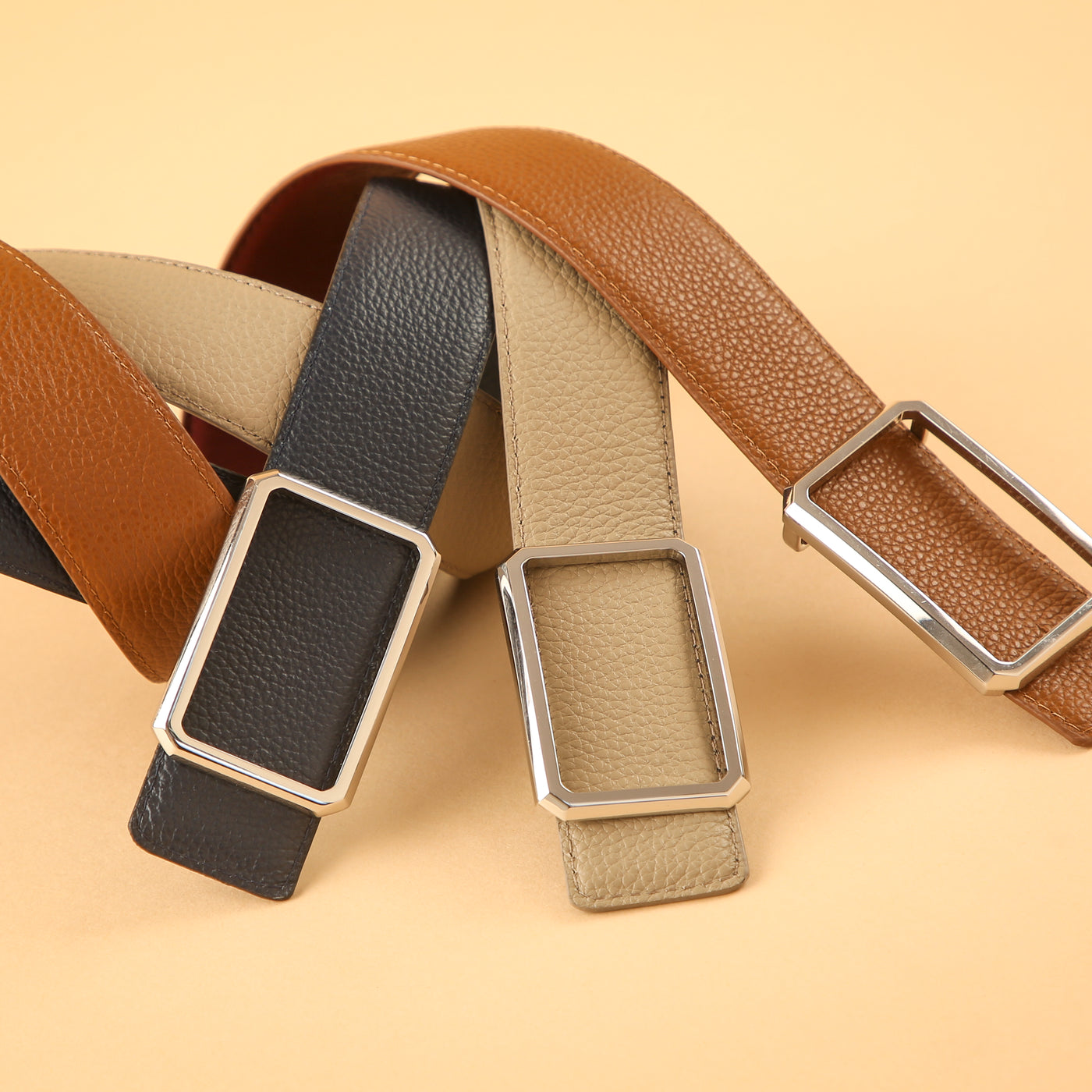
Full-grain leather, ardillon or reversible buckles: simplicity as a signature
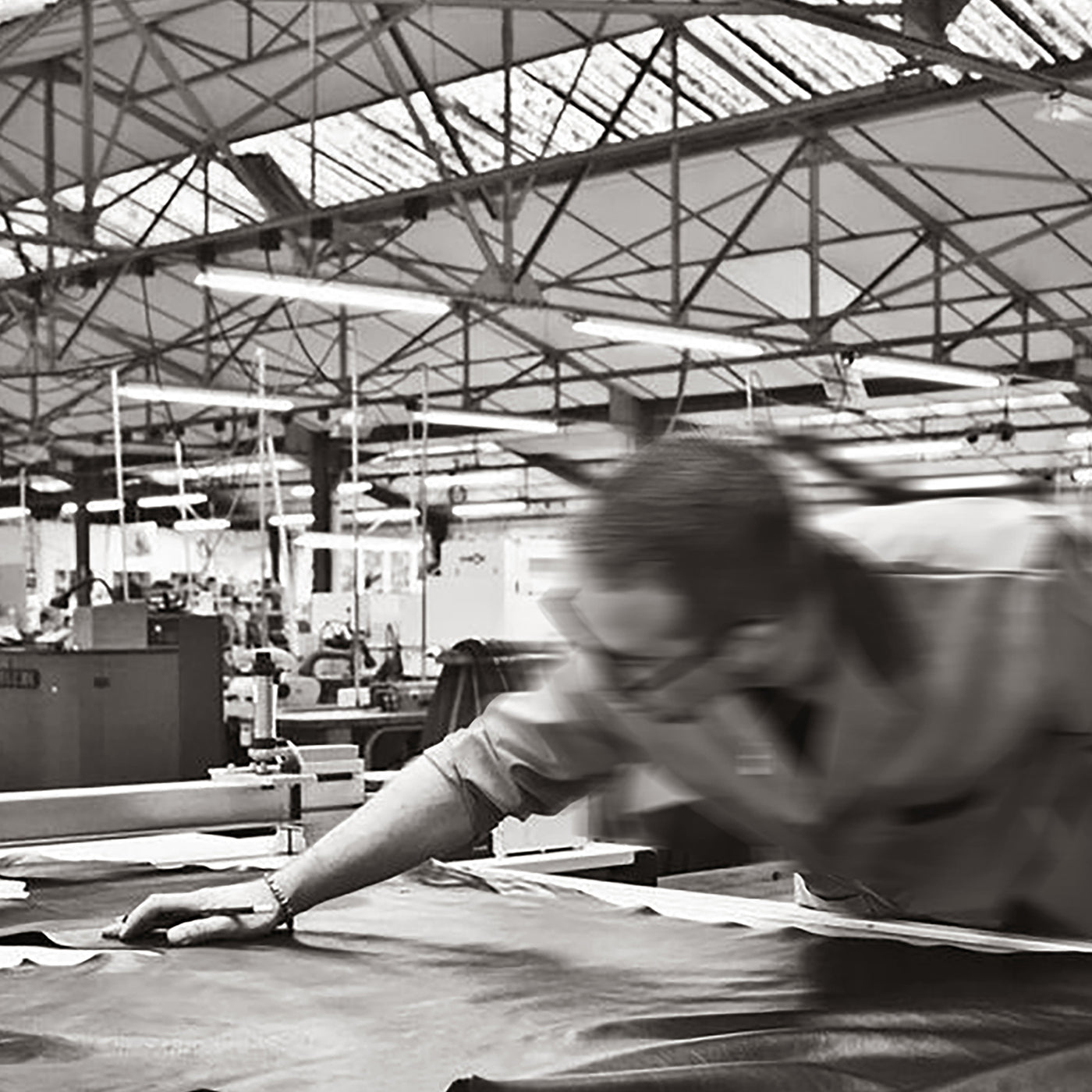
All our dress belts are crafted from full-grain leather, selected for its quality and tanning, then shaped in the Château-Renault workshop, where the Maison, awarded the "Entreprise du Patrimoine Vivant" (Living Heritage Company) label since 2014, has been working with leather since 1930.
They are fitted with two types of buckle:
- A classic, understated metal pin buckle: the most suitable system for dressed-up wear, discreet and easily adjustable thanks to the holes in the strap (unlike an automatic or ratchet buckle, which is more associated with casual use).
- A reversible buckle: it detaches to allow the strap to pivot and reveal its second color, to switch from a more subdued to a dressier shade without changing belts.
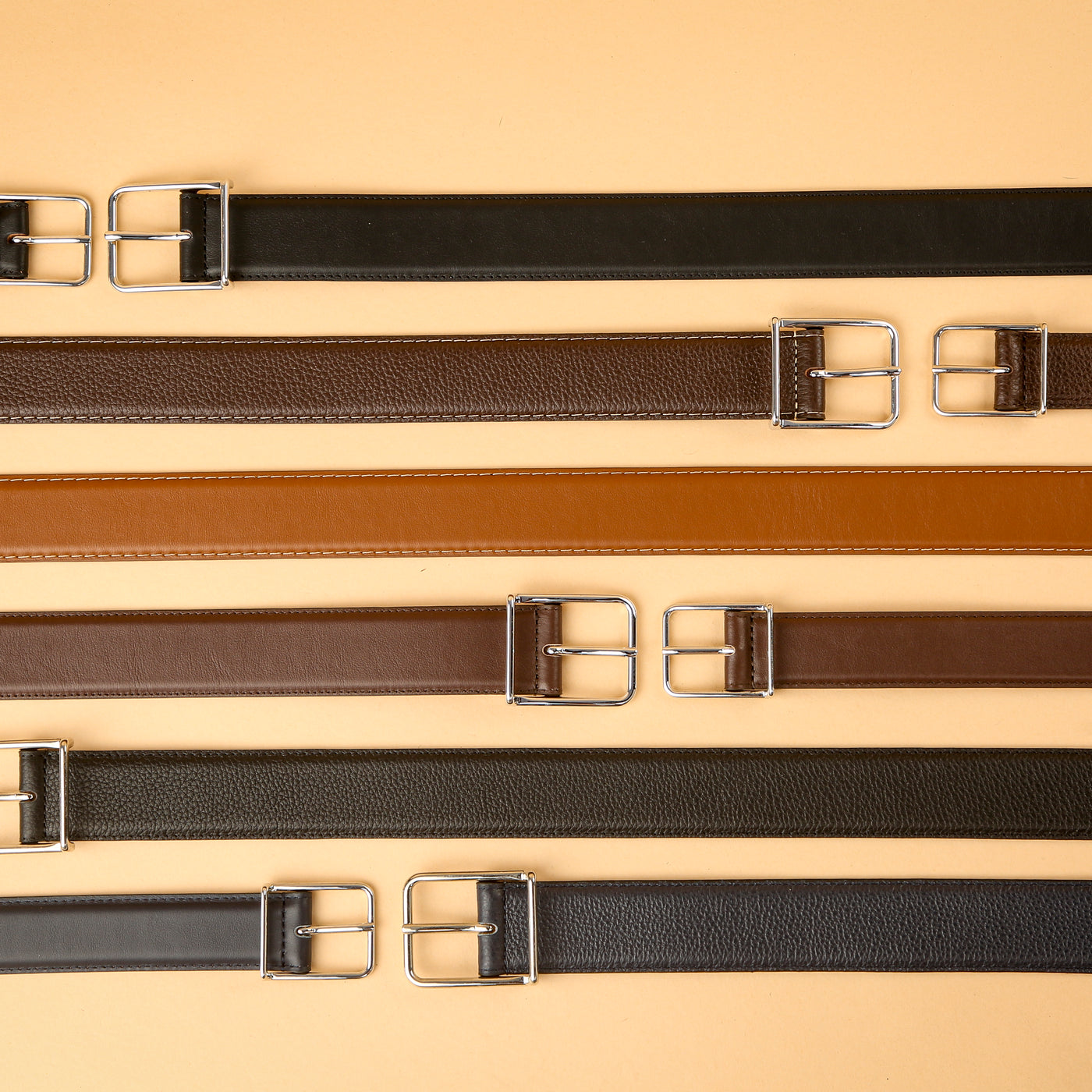
What color for what occasion
Black remains the safest color, suitable for a job interview, a wedding, or any occasion where you don't want to take any risks.
Brown and tan are ideal for more everyday professional use, with a grey or beige suit.
Burgundy, navy, or taupe allow for a more personal touch, while remaining in a dressed-up register.
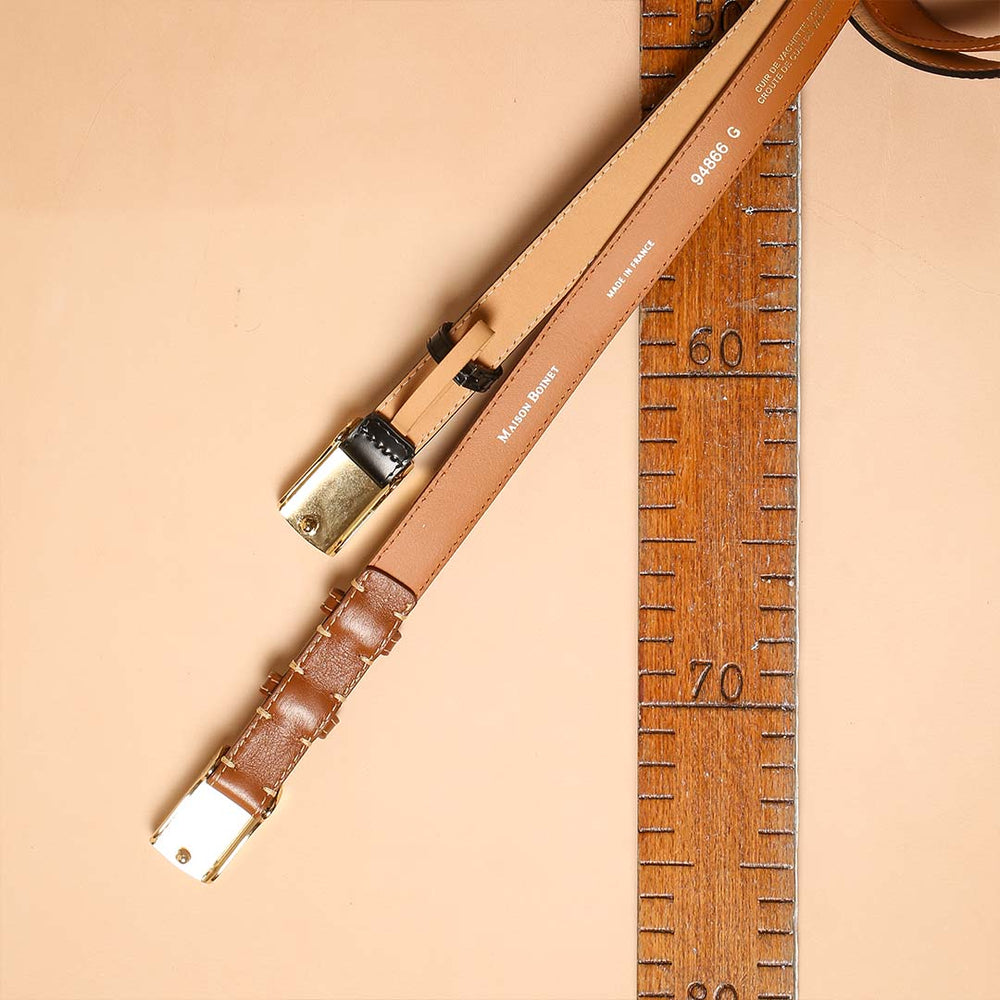
Choosing the right size
Choosing the right size is particularly important for this type of item, which is thinner and more visible than a casual belt: a belt that is too long will leave an unsightly excess of strap hanging out under a jacket.
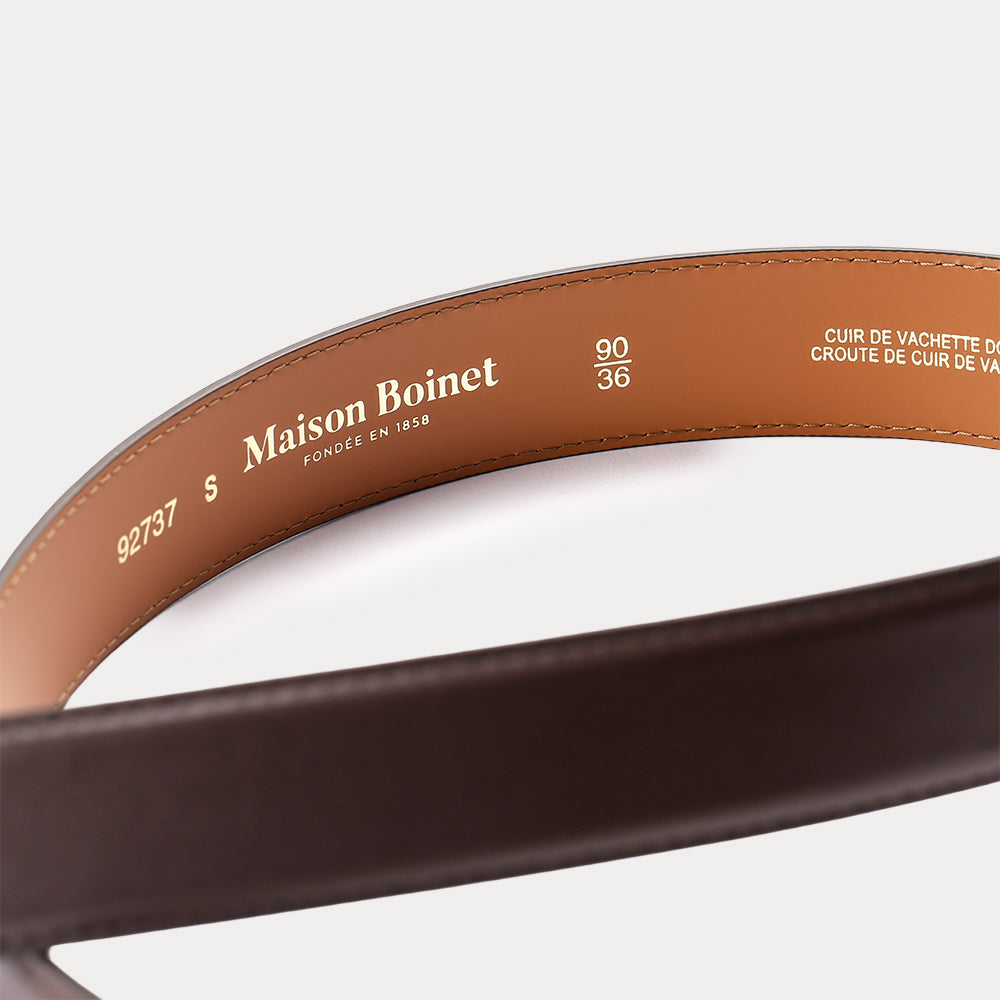
To estimate your size, a simple rule: hip-worn belt size = pant size x2 (rounded up to the next available number) + 10cm. For example, for a size 40 pant, this gives a 90cm belt size.
Please note, this method is an estimate: for a perfect result, it is better to measure yourself directly with a tape measure, from the beginning of the buckle to the middle hole of the belt.
Simple care for long-lasting leather
A suit belt should be cared for like any other full-grain leather: a soft, slightly damp cloth for routine cleaning, a nourishing cream from time to time to preserve its suppleness, and storage away from light and humidity. For daily professional use, alternating two belts rather than always wearing the same one will help the leather keep its shape longer.
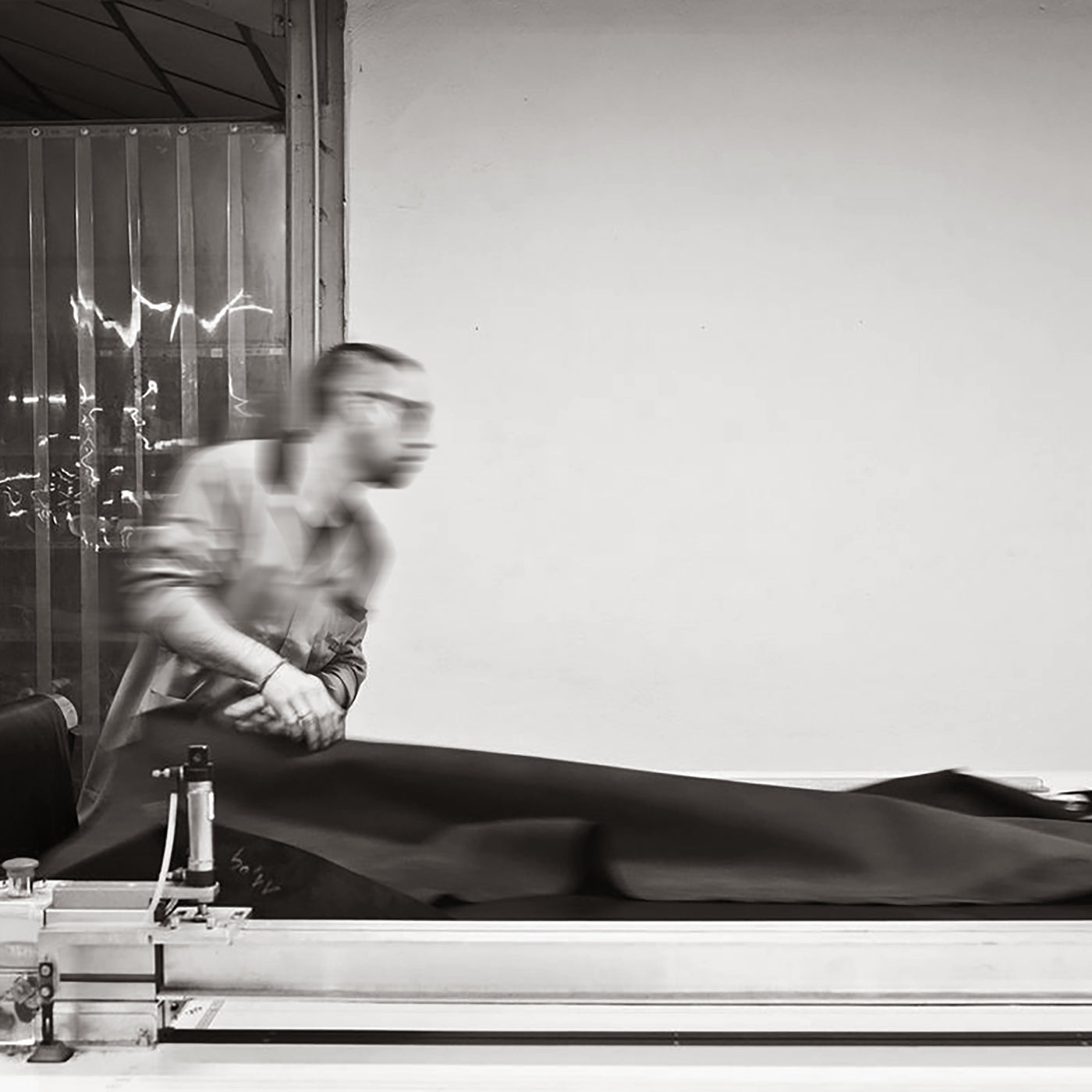
A century of material expertise
Heir to a rich tradition, the House combines artisanal techniques and innovations to create belts of remarkable quality.
Since 1930, each piece has been entirely manufactured in Château-Renault, reflecting expertise passed down through generations. Precise techniques such as edge-bevelling and multi-layered dyeing ensure an impeccable finish. The House rigorously selects materials, guaranteeing perfect cutting and feel.
What width suit belt should a man choose (30mm or 35mm)?
30mm is the standard width for dress pants, and what the majority of our suit collection features. 35mm remains an alternative for a larger build or wider belt loops, without becoming a casual width.
How to match the color of a suit belt to your shoes (black with black, brown with brown)?
The rule remains simple for formal outfits: black belt with black shoes, brown or Havana belt with brown or Havana shoes. For more daily professional use, a slight shade difference (Havana with brown, for example) is still tolerated.
What buckle to choose for a suit belt: classic pin buckle, automatic or ratchet?
Maison Boinet suit belts are equipped with either a classic pin buckle or a reversible buckle, depending on the model. The pin buckle remains the most suitable for dress wear: discreet, it adjusts simply thanks to the holes in the strap, and avoids the more technical effect of an automatic or ratchet buckle, reserved for casual use. The reversible buckle, present on part of the collection, detaches to pivot the strap and change color, a practical option for alternating between a more sober and a dressier look without changing belts.
What is the difference between a men's suit belt and a casual everyday belt?
A suit belt is thinner (30mm, sometimes 35mm, compared to 35mm and up for casual), in sober colors (black, brown, Havana) and without apparent details (rivets, pronounced topstitching, massive buckle). It is designed to disappear under a jacket rather than to stand out.
How to care for a men's smooth leather suit belt for regular professional use?
A slightly damp soft cloth for routine cleaning, a nourishing cream for smooth leather from time to time, and storage away from light and humidity. For intensive daily use, it is better to alternate two belts to allow the leather time to regain its shape.
What men's suit belt to wear with a navy blue, light grey, or beige suit?
With a navy blue suit, black or dark brown remain the safest choices. With a light grey suit, brown, Havana, or grey naturally match. With a beige suit, Havana or beige allow you to stay in the same family of tones.